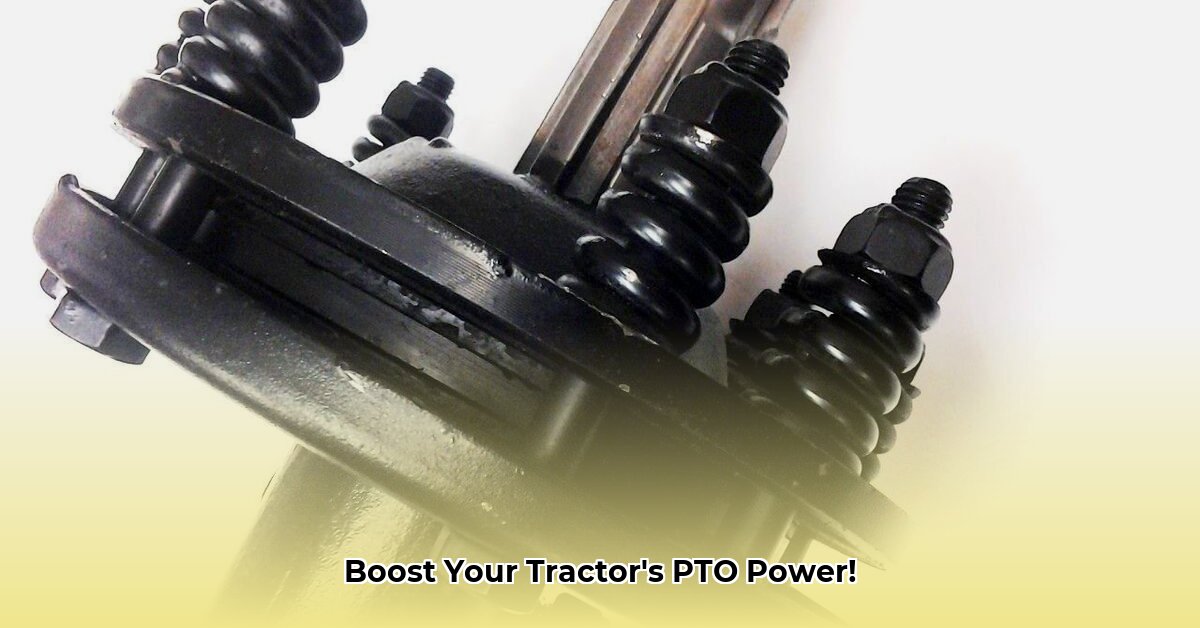
Understanding Tractor PTO Slip Clutches: Protection and Productivity
Let's talk about a critical, often-overlooked component of your farm's machinery: the PTO slip clutch. This unsung hero safeguards your tractor and implements from damage caused by sudden overloads or obstructions. Think of it as a safety valve, preventing costly breakdowns and maximizing operational efficiency. This guide will provide the knowledge you need to choose, install, maintain, and troubleshoot your PTO slip clutch, leading to a more sustainable and profitable farming operation. For more information on slip clutches, check out this helpful resource: Learn More.
The Importance of PTO Slip Clutches in Sustainable Farming
Imagine your tractor's PTO (Power Take-Off) shaft as a conduit delivering power to your implements. The slip clutch acts as a buffer, absorbing shock and preventing damage when unexpected resistance occurs—like hitting a rock while tilling or encountering a particularly dense bale. Without this protection, you risk snapping driveshafts, damaging gears, and incurring significant repair bills. A functioning slip clutch reduces downtime, conserves resources, and contributes to the long-term sustainability of your operation. Isn't minimizing costly repairs and maximizing uptime a key goal for sustainable agriculture?
Types of Tractor PTO Slip Clutches
Several types of PTO slip clutches are available, each suited to different needs and budgets:
Mechanical Slip Clutches: These rely on friction materials (similar to brake pads) to absorb excess torque. They are generally durable, simple, and affordable, making them a popular choice. However, they may not provide the same smooth control as other types.
Hydraulic Slip Clutches: Utilizing hydraulic fluid pressure to control engagement and slippage, these offer smoother operation and often a longer lifespan. They are, however, typically more expensive and require regular fluid checks and maintenance.
Electromagnetic Clutches: Less common in agricultural applications, these offer precise electronic control. While more expensive, they are suitable for specialized situations demanding precise adjustments.
Choosing the right type depends on your tractor's horsepower, the implements you use, and your budget. A higher-powered tractor pulling heavy implements will need a more robust clutch than a smaller tractor working lighter-duty tasks. What type of clutch best suits your specific farming needs and operational context?
Selecting the Right PTO Slip Clutch: A Step-by-Step Guide
Choosing the correct PTO slip clutch isn't guesswork. A methodical approach ensures optimal performance and protection:
Determine your tractor's PTO horsepower: This information is usually found in your tractor's operator's manual. Does your manual clearly state the PTO horsepower rating?
Identify your implements and their torque requirements: Heavier implements demand a more robust clutch. Understand the diverse torque demands presented by your differing implements.
Consider your operating conditions: Rocky terrain or heavy soil increase strain on the clutch. How will your operational environment affect your clutch choice?
Check the clutch's torque capacity: The clutch's rated torque must exceed the maximum torque generated by your highest-demand implement under the harshest conditions. Overestimating is better than underestimating. Is the clutch you are considering adequately rated to manage extreme torque outputs?
Consult with an equipment specialist: Seek advice from experienced dealers or mechanics. Their expertise can provide valuable insights tailored to your specific setup and operational demands. Are you leveraging expert knowledge to guide your clutch selection?
Installation, Maintenance, and Troubleshooting
Installing a PTO slip clutch is best left to qualified mechanics, but understanding crucial maintenance aspects is essential:
Mechanical Clutches: Regularly inspect the friction materials for wear. Replace them as needed to prevent excessive slippage and eventual failure. How often do you inspect and replace worn-out components on your existing slip clutch?
Hydraulic Clutches: Regularly check the fluid level, ensuring it meets the manufacturer's specifications. The fluid must be clean to prevent clutch malfunctions. How routinely do you check the fluid levels of your existing hydraulic systems?
Troubleshooting Common Problems:
- Excessive Slippage: This often signals worn friction materials (mechanical) or low fluid levels (hydraulic).
- Sudden Engagement Failure: This could indicate a broken spring, a damaged shaft, or other internal mechanical problems.
- Unusual Noises: Grinding or squealing sounds suggest internal damage and require immediate attention.
- "Regular maintenance is key to preventing clutch issues," says Dr. Anya Sharma, Agricultural Engineer at Purdue University. "Proactive checks can avoid costly repairs and keep your operations smooth."
If you encounter problems, don't attempt complex repairs yourself unless properly trained. Consult a qualified mechanic. Have you considered a preventative maintenance program for your agricultural machinery?
Cost-Benefit Analysis: Long-Term Sustainability
While the initial investment might seem substantial, the long-term benefits far outweigh the cost. Preventing catastrophic equipment failures saves thousands in repairs and minimizes downtime. Reduced wear and tear extends implement lifespan, boosting long-term sustainability. Is the initial cost of a quality PTO slip clutch a worthwhile expenditure given the potential cost savings from avoiding costly repairs and downtime?
Safety First: Prioritizing Safe Practices
Safety is paramount:
- Always disconnect the PTO before maintenance or repairs.
- Ensure the tractor's engine is off and the PTO shaft is stationary.
- Use appropriate safety equipment, including gloves and eye protection.
- Never work on a clutch without adequate training, tools, and safety gear.
Following these safety protocols is crucial for protecting yourself and your equipment.
Case Study: Sustainable Farming Success
A farmer in Iowa reported significantly improved fuel efficiency and reduced implement wear after upgrading to a hydraulic PTO slip clutch. Smoother operation minimized stress on the tractor's transmission, leading to lower fuel consumption and increased yields. The farmer noted a 15% reduction in fuel costs over three seasons. How could a well-chosen PTO slip clutch contribute to the economic and environmental sustainability of your farm?
Conclusion: Integrating PTO Slip Clutches into Sustainable Farming Practices
A properly selected and maintained PTO slip clutch is not merely a component; it's a vital element in a sustainable farming operation. It contributes significantly to the longevity of your equipment and the success of your farm. By understanding and applying this knowledge, you can enhance the efficiency, reliability, and sustainability of your farming practices.